
Japan Travel Guide: Everything You Need to Know (2026)
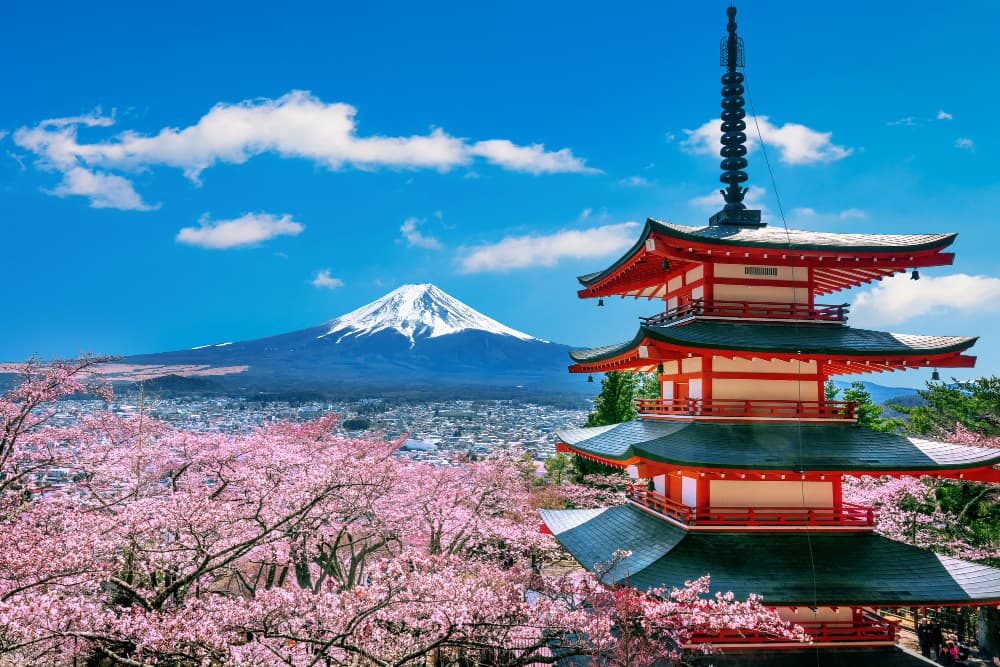
Japan is not a difficult country to visit — but it rewards preparation more than almost anywhere else. The transport system, the cultural norms, the cash economy, the language barrier — none of these are insurmountable, but knowing about them before you land makes an enormous difference. This guide covers everything you need to plan a trip to Japan in 2026.
Best Time to Visit Japan
Japan has four distinct seasons and each one offers a genuinely different experience.
Spring (March–April): Cherry blossom season — Japan's most famous and most crowded period. Hotels book out months in advance and prices spike. If you want to see sakura, plan very early or prepare for the crowds.
Early Summer (May): The cherry blossom crowds have gone home and the "shinryoku" season begins — fresh green foliage covers temples and parks across the country. Temperatures are comfortable at 18–24°C, prices drop noticeably, and cities feel manageable again. One of the best times to visit Japan.
Autumn (October–November): The second peak season. The "koyo" season — red and orange maple leaves — transforms Kyoto's temples into something extraordinary. Busy, but slightly less chaotic than cherry blossom season.
Winter (December–February): The quietest tourist period. Snow-covered Japan is beautiful — Hokkaido and Nikko for skiing, Tokyo's museums and restaurants without the queues, prices at their lowest. Underrated.
Summer (July–August): Hot, humid (30–35°C), crowded and expensive. Worth it if you want to experience matsuri (summer festivals), but not the ideal general travel window.
Visa Information
Japan offers visa-free entry to citizens of many countries for stays of up to 90 days for tourism, business, and family visits. No embassy appointment needed — your passport is sufficient.
Countries with visa-free access to Japan (90 days unless noted):
| Region | Countries |
|---|---|
| Europe | UK, Germany, France, Italy, Spain, Netherlands, Portugal, Sweden, Norway, Switzerland, Austria, Belgium, Denmark, Finland, Greece, Ireland, and most EU countries |
| Americas | USA, Canada, Brazil, Argentina, Mexico, Chile |
| Asia-Pacific | Australia, New Zealand, Singapore, Malaysia, South Korea, Hong Kong |
| Middle East & Africa | Turkey, Qatar |
This is not a complete list — Japan has visa waiver agreements with over 68 countries. Always verify your specific situation with Japan's Ministry of Foreign Affairs or your nearest Japanese embassy before travel.
Note: Visa-free entry doesn't guarantee admission. Immigration officers can ask about your purpose of visit, onward travel, and financial means.
Best Places to Visit in Japan
🗼 Tokyo
Japan's capital and the world's largest city — yet surprisingly navigable. Shinjuku's neon-lit streets, Shibuya's famous pedestrian crossing, Harajuku's fashion subcultures, and Asakusa's Senso-ji Temple all offer completely different worlds within the same city. Allow 3–4 days minimum.
Don't miss: Early morning at Tsukiji Outer Market, an afternoon in Shinjuku Gyoen park, and just standing at the Shibuya Crossing at rush hour — one of those moments that stays with you.
⛩️ Kyoto
Japan's ancient capital and cultural heart. Over 1,600 Buddhist temples and Shinto shrines, traditional wooden machiya townhouses, and some of the country's finest kaiseki cuisine. Fushimi Inari's thousands of orange torii gates, Arashiyama's bamboo grove, Gion's geisha district, and Kinkaku-ji's golden pavilion are all here.
Practical tip: Go early. Popular spots like Fushimi Inari and Arashiyama are transformed in the first hour after opening — and overwhelmed by late morning.
🍜 Osaka
Japan's food capital, full stop. Takoyaki, okonomiyaki, kushikatsu — Osaka's street food culture is more alive than anywhere else in Japan. The Dotonbori district at night is essential. Osaka Castle is worth a visit for the history, Universal Studios Japan for those who want it. Its proximity to Kyoto (15 minutes by shinkansen) makes it easy to base yourself here for both cities.
🏔️ Nikko
Two hours from Tokyo, Nikko is one of Japan's most ornate historical sites. The Tosho-gu Shrine complex is UNESCO-listed and genuinely spectacular — intricate carvings, gold leaf, mountain forest setting. Nikko National Park surrounds the town for hiking and nature. Autumn foliage here rivals Kyoto.
🌸 Hiroshima and Miyajima
Hiroshima today is a vibrant, forward-looking city with excellent food and a thoughtful, moving Peace Memorial Museum. A short ferry ride away, Miyajima Island has one of Japan's most iconic images: the "floating" torii gate rising from the sea at Itsukushima Shrine. Both are worth a full day each.
🦌 Nara
An easy day trip from Kyoto or Osaka. Nara Park is home to over 1,200 freely roaming sika deer — and Todai-ji Temple houses Japan's largest bronze Buddha statue. Don't underestimate it: many people put Nara on their schedule as an afterthought and find it one of the most memorable parts of the trip.
What to Eat in Japan
Japanese food varies significantly by region — each city has its own specialties and takes them seriously.
In Tokyo: Ramen everywhere, but the best shops cluster around Shinjuku and Shibuya stations. Tsukiji Outer Market for fresh sushi from 6am. Tempura, tonkatsu, and yakitori are Tokyo staples. For restaurant recommendations, use Google Maps or Tabelog — Japan's most trusted restaurant review platform.
In Osaka: Osaka's nickname is "the nation's kitchen" and it earns it. Takoyaki (octopus balls), okonomiyaki (savoury pancake), kushikatsu (skewered deep-fried food) — these are Osaka's signature dishes and the Dotonbori area is the place to eat them. Unlike most of Japan, eating while walking is accepted here.
In Kyoto: Kyoto's food is more refined. Tofu dishes, yudofu (hot tofu), and kaiseki (traditional Japanese multi-course dining) are the specialties. Nishiki Market is a covered street market with dozens of local food stalls — ideal for snacking your way through.
Everywhere: - Convenience stores (konbini) are genuinely good. 7-Eleven, Lawson, and FamilyMart sell onigiri, sandwiches, hot foods, and fresh pastries — cheap and surprisingly excellent. Don't be a snob about it. - Depachika: The basement food halls of department stores contain dozens of restaurants and food counters — one of Japan's great underrated experiences. - Vending machines: Hot miso soup, cold coffee, ice cream — everywhere, including on mountain hiking trails.
What to Buy in Japan
Japan is one of the world's best shopping destinations — both for unique Japanese products and for global brands at better prices and wider selections than elsewhere.
Cosmetics and Beauty: Japanese skincare is renowned globally — and buying it in Japan is significantly cheaper than buying it abroad. Sunscreen, toner, face masks, hair treatments — the range is vast. Where to shop: Don Quijote (branches everywhere, open late), Matsumoto Kiyoshi pharmacy chains, and department store cosmetics floors.
Matcha and Tea: Uji matcha — produced near Kyoto — is considered the finest quality. Matcha chocolate, matcha KitKat, matcha mochi are all genuinely Japan-specific and make excellent gifts. Tea sets and ceramics for the serious tea enthusiast are best found in Kyoto markets.
Snacks and Sweets: Every region has its own omiyage (souvenir food) — yatsuhashi in Kyoto, ningyo-yaki in Tokyo, Osaka's tsuruya hachimanyo. Regional KitKat flavours (green tea, wasabi, sake) are only available in Japan. Stock up before the airport — city prices are significantly lower.
Stationery: Japanese stationery culture is extraordinary. Pens, notebooks, washi tape, sticker collections — Loft and Tokyu Hands are the best destinations. Muji's minimalist stationery line is available at a fraction of international prices.
Clothing: Uniqlo in Japan has a far wider range and lower prices than international stores — particularly Heattech base layers and UV-protection clothing. Harajuku and Shibuya have excellent vintage and second-hand shops for those interested in Japanese street fashion.
Crafts and Gifts: Origami paper, hand-painted ceramic bowls, sensu (folding fans), furoshiki (wrapping cloth), noren (doorway curtains) — lightweight, meaningful, and genuinely Japanese. Asakusa's Nakamise shopping street and Kyoto's Nishiki Market are the best places to find them.
Where to Shop: - Don Quijote (Donki): Open late, branches everywhere, sells everything from cosmetics to electronics to snacks at discount prices. First stop. - Loft / Tokyu Hands: Stationery, lifestyle goods, hobby supplies. - Depachika: Department store basement food and gift floors. - Airport duty-free: Most expensive option — buy in the city.
Practical Information
Getting Around
JR Pass: Covers Japan's shinkansen (bullet train) network and is essential for multi-city travel. Must be purchased outside Japan — order online before you leave. Calculate your routes first to confirm it's worth it for your itinerary.
IC Card (Suica/Pasmo): A rechargeable card that works on metro, buses, and even in many convenience stores. Get one at the airport as soon as you land — it makes daily life significantly easier.
City transport: Tokyo's metro looks intimidating but Google Maps handles it perfectly. Signs are in English throughout.
Taxis: Expensive but clean and reliable. Uber operates in Japan but isn't cheaper than regular taxis.
Money
Japan remains largely cash-based. Many restaurants, small shops, and temple entry points accept cash only. Withdraw yen from 7-Eleven or Japan Post ATMs — these reliably accept foreign cards. Larger shops, hotels, and chain restaurants take cards, but carry cash for smaller establishments.
Language
English signage covers most tourist areas — metro stations, major attractions, and large restaurants almost always have English. Smaller towns are harder. Google Translate's camera function is invaluable for menus and signs. A few useful phrases:
- Hello: Konnichiwa (こんにちは)
- Thank you: Arigatou gozaimasu (ありがとうございます)
- Excuse me: Sumimasen (すみません)
- How much is this?: Ikura desu ka? (いくらですか?)
- I don't understand: Wakarimasen (わかりません)
Cultural Notes
A few things worth knowing before you arrive:
- Don't eat while walking — considered rude in most of Japan (Osaka is the exception).
- Remove shoes at temples and traditional restaurants — look for signs at entrances.
- Keep noise down on public transport — no phone calls, no loud music.
- Don't tip — tipping is not part of Japanese culture and can create awkward situations.
- Carry your rubbish — public bins are rare but streets are immaculate. Everyone carries their waste until they find a bin.
Internet
Wi-Fi is widely available in airports, hotels, and many cafes — but you won't always have it. Between cities, in smaller towns, and whenever you need maps or translation without warning, having your own data connection matters.
Globy eSIM lets you load a Japan data plan onto your phone before you fly. No queuing at the airport for a SIM card, no pocket Wi-Fi router to carry — just connectivity from the moment you land.
Budget Guide
Japan has a reputation for being expensive, but it's possible to manage costs with the right choices.
Food: Ramen, sushi, and bento boxes run $8–15. Convenience store meals are $3–6 and genuinely good. High-end omakase sushi can cost $200+ per person — but that's a choice.
Accommodation: Hostels and capsule hotels from $20–40/night. Standard business hotels $80–150. Ryokan (traditional inn with dinner included) $150–400 — worth doing at least one night.
Transport: 7-day JR Pass approximately $300. IC card for city transport $5–10/day.
Daily budget: Budget traveller $70–100/day. Mid-range $150–200/day.
Stay Connected: eSIM for Japan
Japan's mobile network coverage is excellent across cities and most rural areas. The easiest way to stay connected throughout your trip is with Globy eSIM — load your data plan before you fly, and you're connected the moment you land in Tokyo.
Get your Japan eSIM at Globy →
Frequently Asked Questions
Do I need a visa for Japan?
Citizens of over 68 countries — including the US, UK, most EU countries, Australia, Canada, Turkey, and many others — can enter Japan visa-free for up to 90 days for tourism. Check the full list with Japan's Ministry of Foreign Affairs or your nearest Japanese consulate.
How many days do you need in Japan?
10–14 days covers the main highlights: Tokyo (3–4 days), Kyoto (2–3 days), Osaka (2 days), with day trips to Nara and Hiroshima. A week is possible if you focus on Tokyo and Kyoto only. Japan rewards longer visits — the more time you have, the more layers you find.
Is Japan expensive?
It has a reputation for being expensive, but it's very manageable. Street food and convenience store meals are cheap, transport is efficient, and there are accommodation options at every price point. The biggest costs are flights and mid-range hotels — book early.
Is English spoken in Japan?
In major cities and tourist areas, enough English gets by. Signs at train stations and airports are in English. Smaller towns are harder. Google Translate's camera function is essential for menus and signs in Japanese.
What is the best month to visit Japan?
May (post-cherry blossom, fresh green season) and November (autumn foliage) offer the best balance of good weather, manageable crowds, and reasonable prices. March–April for cherry blossom, but book months in advance. December–February for the quietest and cheapest period.
What should I buy in Japan?
Japanese skincare and cosmetics (significantly cheaper than abroad), matcha products, regional snacks and KitKat flavours, Muji and Loft stationery, Uniqlo at Japanese prices, traditional crafts from Kyoto markets. Don Quijote is the best all-purpose shopping destination.
How do I get internet in Japan?
The most convenient option is an eSIM loaded before you fly. Globy offers Japan data plans — buy online, install via QR code, and you're connected as soon as you land. No airport queues, no pocket Wi-Fi router, no SIM card swapping.
Final Thoughts
Japan is the kind of place that changes how you think about travel. The efficiency, the food, the contrast between ancient and ultramodern, the meticulous attention to detail in almost everything — it adds up to something genuinely unlike anywhere else. Go prepared, go curious, and give yourself enough time.
Get your Japan eSIM at Globy →
This article is published by the Globy team. Visa requirements vary by nationality and are subject to change — always verify with official sources before travel.